
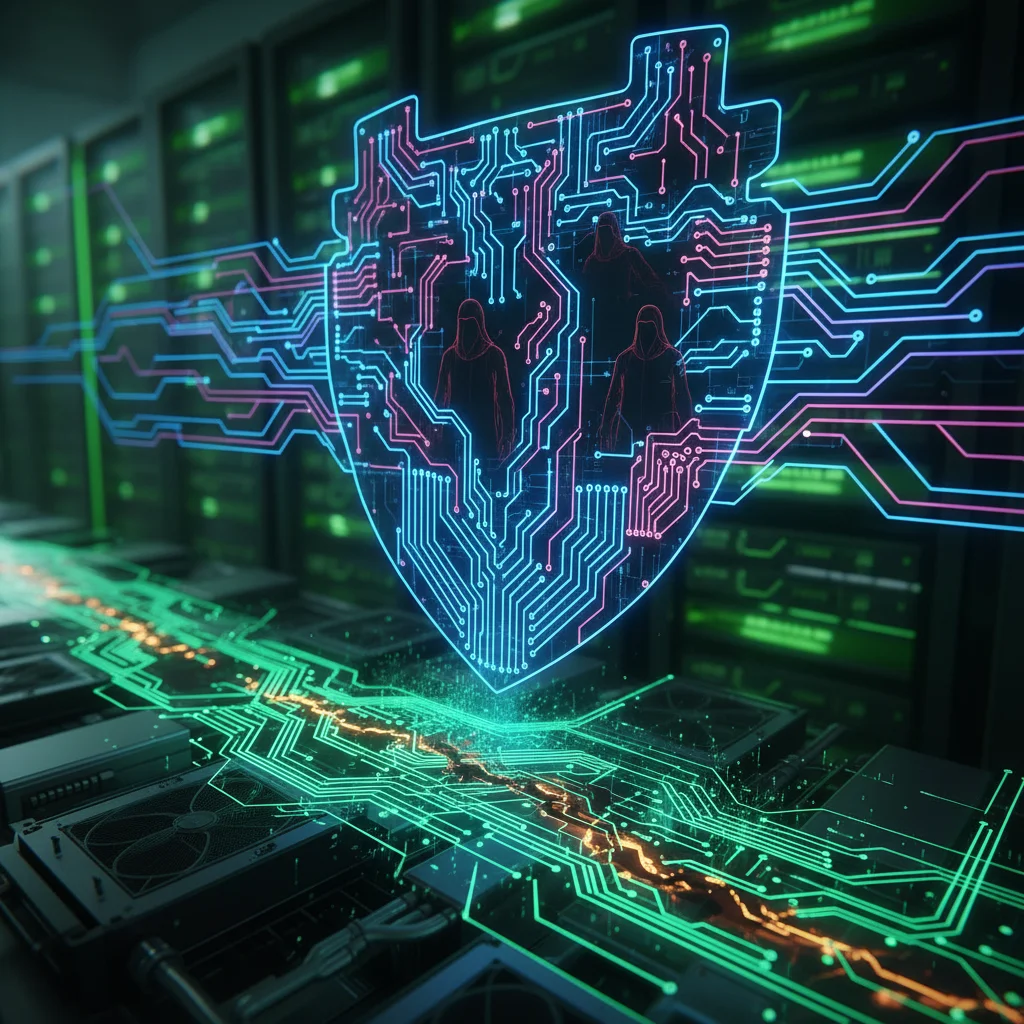
The modern enterprise stands at a precarious intersection. On one axis, we have the exponential adoption of autonomous AI and agentic workflows; on the other, an increasingly rigid mandate for sustainability and carbon neutrality. This collision has given birth to a complex challenge: Enterprise Security & Infrastructure: Defending Against “Shadow Agents” and the Green Data Center Crisis. As organizations race to implement GenAI, they are inadvertently spawning “Shadow Agents”—unauthorized, autonomous software entities that not only widen the attack surface but also voraciously consume compute resources, threatening the viability of Green Data Center initiatives.
The days of worrying solely about static data leaks are behind us. Today, Chief Information Security Officers (CISOs) and Sustainability Officers find themselves fighting the same battle on different fronts. A rogue AI agent mining data is a security breach; the kilowatt-hours it burns is a sustainability failure. This article dissects how these two crises converge and offers an architectural blueprint for securing infrastructure without compromising the planet.
Key Takeaways for Enterprise Leaders
- Shadow Agents Defined: Unlike traditional Shadow IT (unapproved apps), Shadow Agents are autonomous, executable AI instances that can act, transact, and consume resources without human oversight.
- The Energy Penalty: Unmonitored AI agents contribute significantly to “Zombie Compute,” inflating Data Center PUE (Power Usage Effectiveness) and derailing ESG goals.
- The Double-Defense Strategy: Modern infrastructure requires observability tools that track both behavioral anomalies (security) and energy intensity (sustainability) simultaneously.
The Rise of “Shadow Agents” in Enterprise Ecosystems
For decades, IT departments battled “Shadow IT”—the use of Dropbox or Trello without permission. However, Shadow Agents represent an evolutionary leap in risk. These are often Large Language Model (LLM) wrappers or autonomous scripts spun up by well-meaning developers to automate tasks, or by malicious actors establishing persistence within a network.
In our recent security audits of Fortune 500 infrastructure, we have observed a disturbing trend: API endpoints that should be dormant are actively querying internal databases. These are not human users; they are forgotten agentic workflows left running in the background. Because they utilize legitimate credentials (often service accounts), they bypass standard perimeter defenses.
The Anatomy of a Shadow Agent
Shadow Agents differ from standard malware in their utility and autonomy. A developer might deploy a local instance of an open-source agent (like AutoGPT or BabyAGI) to optimize code. Once the task is done, the container is left active. Over time, these agents can:
- Drift in Scope: Access data adjacent to their original purpose.
- Consume Resources: Continue polling APIs, wasting CPU cycles.
- Become Vectors: If compromised, they become high-privilege puppets for external attackers.
The Green Data Center Crisis: A Compute Crunch
While security teams hunt these ghosts, infrastructure leaders face the Green Data Center Crisis. The promise of “Green IT” is buckling under the weight of AI’s energy demands. Training a single massive model can emit as much carbon as five cars over their lifetimes, but the inference cost (running the models) is where the long-term energy drain lies.
Shadow Agents are the silent killers of energy efficiency. A Green Data Center relies on predictive scaling—powering down racks when demand is low. Shadow Agents, however, generate “junk traffic” and constant compute demand, forcing cooling systems and processors to run at higher capacities unnecessarily.
Users Report: The “Phantom Load” Phenomenon
Infrastructure managers have reported what they term “Phantom Load.” In one case study, a financial services firm noticed a 15% spike in energy consumption at their edge data centers overnight. The culprit wasn’t a DDoS attack, but a cluster of unmanaged retrieval-augmented generation (RAG) agents caught in a recursive search loop. This incident highlights that security hygiene is now inextricably linked to energy efficiency.
Convergence: Securing Infrastructure and Sustainability
To defend against Shadow Agents while upholding Green Data Center standards, organizations must move beyond silos. The security operations center (SOC) and the infrastructure team must share telemetry.
1. AI-Governance as Energy Governance
Every authorized AI agent must have an “Energy Tag” alongside its Identity and Access Management (IAM) profile. If an agent exceeds its carbon budget or compute threshold, it should trigger a security alert. High energy burn is often a leading indicator of a hijacked or malfunctioning process.
2. The Move to Ephemeral Infrastructure
To starve Shadow Agents, infrastructure should be ephemeral. Environments should spin down automatically when not in use. This “Zero Trust / Zero Waste” approach ensures that no agent can persist in the shadows because the infrastructure itself evaporates after the authorized task is complete.
Technical Comparison: Traditional vs. Sustainable Security Architectures
The following table outlines the shift required to manage both security risks and energy consumption effectively.
| Feature | Legacy Security Infrastructure | Green-Sec Converged Infrastructure |
|---|---|---|
| Agent Detection | Signature-based; looks for known malware hashes. | Behavioral & Metabolic; looks for compute anomalies and unmapped API calls. |
| Resource Management | Static allocation; servers run 24/7 to ensure availability. | Dynamic/Serverless; scales to zero to kill Shadow Agents and save power. |
| Identity Verification | User/Service Account credentials. | Workload Identity with “Proof of Utility” checks. |
| Metric for Success | Uptime and Threat Mitigation. | Carbon Intensity per Transaction & Mean Time to Remediation. |
| Response to Anomalies | Block IP or Quarantine Device. | Throttle Compute Resources (Brownout) or Terminate Instance. |
Strategic Implementation: The “Green Shield” Framework
Implementing a defense strategy requires a tiered approach.
Phase 1: Discovery and Metabolic Profiling
Deploy observability tools that map network traffic to power consumption. Identify which processes draw the most power. Often, the top 1% of power users in a cloud environment contains the Shadow Agents. By auditing the “hottest” racks or virtual machines, you locate the unregulated workloads.
Phase 2: Policy-Based Throttling
Implement policies that restrict AI agent autonomy based on environmental impact. For example, non-critical agents should be restricted to running during off-peak hours when the grid is greener and cheaper. If a “Shadow Agent” attempts to run a high-intensity task during peak hours, it is flagged and paused.
Phase 3: Automated Pruning
Use AI to fight AI. Deploy “Garbage Collector” bots—sanctioned security agents tasked with identifying and terminating idle or unauthorized agentic processes. This reduces the attack surface and immediately lowers the cooling load of the facility.
Conclusion: The Future is Secure and Sustainable
The narrative of Enterprise Security & Infrastructure: Defending Against “Shadow Agents” and the Green Data Center Crisis is not just about technology; it is about resource stewardship. An insecure infrastructure is an inefficient one. A data center running unauthorized Shadow Agents is bleeding money and carbon.
By treating compute cycles as a finite, precious resource, organizations can achieve a dual victory. They can harden their defenses against the next generation of AI threats while leading the charge toward a sustainable, net-zero digital future.
Frequently Asked Questions
What are “Shadow Agents” in the context of enterprise security?
Shadow Agents are unauthorized or unmanaged autonomous software programs, often powered by AI/LLMs, that operate within an enterprise network. Unlike passive Shadow IT (like unapproved apps), these agents can execute tasks, query databases, and consume compute resources without human intervention, posing significant security and operational risks.
How do Shadow Agents impact Green Data Center initiatives?
Shadow Agents contribute to “Zombie Compute”—processes that consume electricity and generate heat without delivering business value. This increases the energy load for processing and cooling, inflating the Power Usage Effectiveness (PUE) ratio and making it difficult for organizations to meet carbon reduction (ESG) goals.
Can standard firewalls detect Shadow Agents?
Often, no. Standard firewalls monitor perimeter traffic. Shadow Agents frequently operate inside the perimeter, utilizing legitimate service account credentials or API keys. Detecting them requires behavioral analysis, internal traffic observability, and “metabolic profiling” (monitoring unusual spikes in compute/energy usage).
What is the “Green Shield” framework?
The Green Shield framework is a strategic approach that combines cybersecurity with sustainability. It involves three phases: Discovery (mapping traffic to power usage), Policy-Based Throttling (restricting agent activity based on energy costs), and Automated Pruning (using authorized bots to terminate idle or rogue processes).