
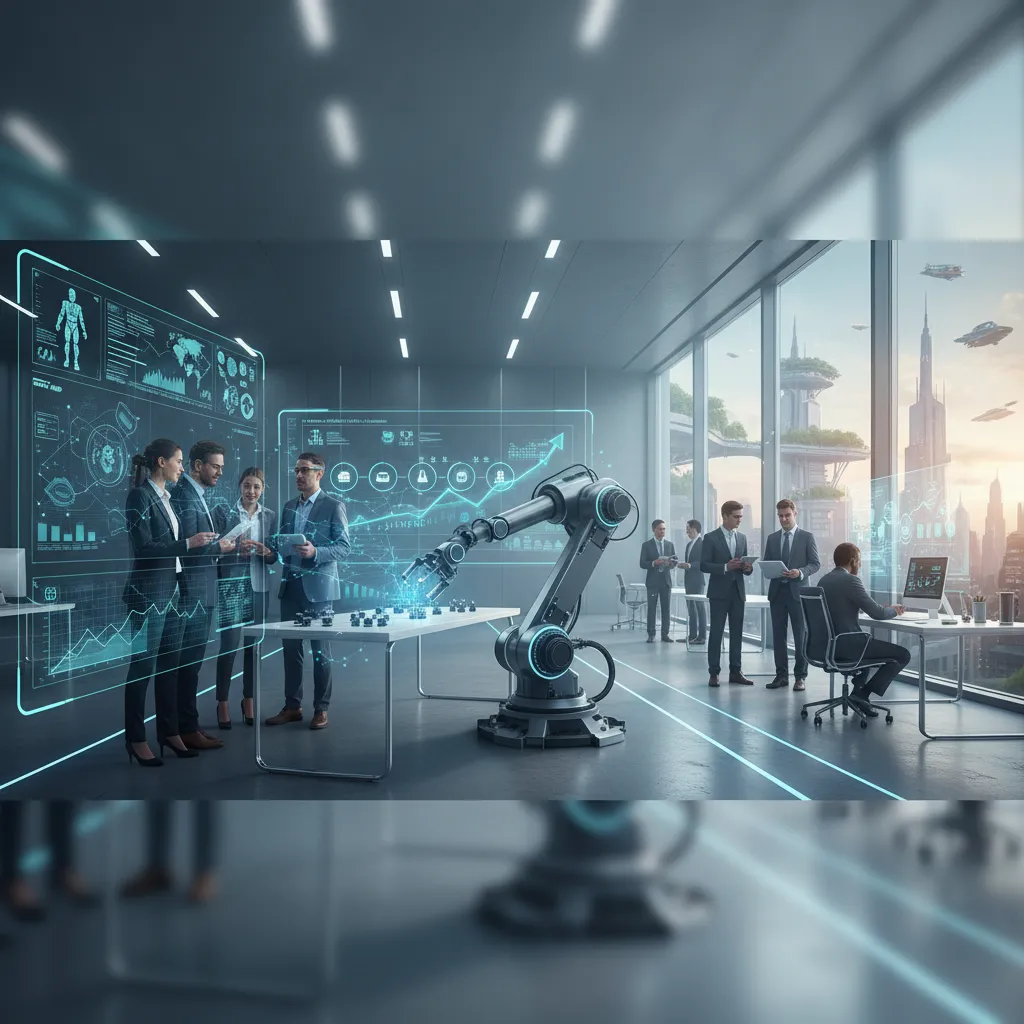
- Artificial Intelligence is shifting from simple task automation to complex cognitive augmentation.
- Soft skills like emotional intelligence, critical thinking, and adaptability are becoming the primary differentiators for human workers.
- Reskilling and upskilling are no longer optional but essential for career longevity in the AI era.
- New job categories are emerging that focus on managing, training, and auditing AI systems.
The narrative surrounding Artificial Intelligence (AI) and the future of work has often fluctuated between utopian visions of leisure and dystopian fears of mass unemployment. However, the reality settling in across global industries is far more nuanced. We are currently navigating a significant paradigm shift where the question is no longer if AI will change how we work, but how we can adapt to maximize the benefits of this technological revolution.
As algorithms become more sophisticated and Generative AI tools permeate every sector from software engineering to creative writing, the definition of “work” is being rewritten. This article explores the trajectory of automation, the skills required to survive and thrive, and the new opportunities emerging from the disruption.
The Evolution: From Blue-Collar Automation to White-Collar Augmentation
Historically, automation was synonymous with robotics in manufacturing—machines replacing muscle to assemble cars or package goods. Today, the frontier has moved to the knowledge economy. Large Language Models (LLMs) and predictive analytics are now capable of performing tasks previously thought to be the exclusive domain of educated professionals.
The Difference Between Replacement and Augmentation
Understanding the distinction between replacement and augmentation is crucial for strategic workforce planning. While AI can replace specific tasks, it rarely replaces entire jobs. instead, it acts as a force multiplier.
- Replacement: Repetitive, rule-based data entry, basic transcription, and standardized reporting.
- Augmentation: Coding assistants (like GitHub Copilot), AI-driven medical diagnostics, and strategic financial forecasting.
“AI will not replace you. A person using AI will.” — This sentiment has become the mantra for the modern professional, highlighting the necessity of human-AI collaboration.
Comparing Eras of Automation
To better understand the current landscape, it is helpful to compare traditional automation with the new wave of Intelligent Automation.
| Feature | Traditional Automation (Industrial Era) | Intelligent Automation (AI Era) |
|---|---|---|
| Primary Focus | Physical labor and repetitive mechanical tasks. | Cognitive tasks, data analysis, and content creation. |
| Flexibility | Rigid; follows strict, pre-programmed rules. | Adaptive; learns from data and improves over time. |
| Human Interaction | Operates alongside humans (often separated for safety). | Collaborates with humans via natural language interfaces. |
| Value Add | Speed, consistency, and physical safety. | Insight generation, creativity support, and decision speed. |
The Reskilling Imperative: Adapting to the New Normal
As technical barriers to entry lower (due to AI writing code or generating designs), the value of specific hard skills may fluctuate. However, the premium on “human-centric” skills is skyrocketing. To remain competitive, workers must pivot towards capabilities that AI struggles to replicate.
1. Emotional Intelligence (EQ) and Empathy
AI can process natural language, but it cannot genuinely understand human emotion or cultural nuance. Roles involving negotiation, leadership, patient care, and complex client management will rely heavily on high EQ.
2. Critical Thinking and Judgment
AI models can hallucinate or produce biased outputs. The role of the human is shifting from “creator” to “editor” and “auditor.” Professionals must possess the critical thinking skills to verify AI outputs, interpret context, and make ethical decisions based on data.
3. AI Literacy and Prompt Engineering
Knowing how to effectively communicate with AI systems is a new form of literacy. This involves:
- Understanding the capabilities and limitations of current models.
- Structuring queries to elicit the best results (Prompt Engineering).
- Identifying potential security and privacy risks associated with AI tools.
Emerging Opportunities: New Jobs Created by AI
The destruction of old roles invariably leads to the creation of new ones. Just as the internet created jobs for social media managers and SEO specialists, AI is birthing entirely new career paths.
- AI Ethicists: Professionals dedicated to ensuring algorithms are fair, transparent, and unbiased.
- Data Curators: Experts who clean, label, and manage the massive datasets required to train effective models.
- Human-in-the-Loop Facilitators: Workers who handle edge cases that confuse AI and provide feedback for model retraining.
- Smart Home/City Designers: Architects and engineers integrating AI into the physical infrastructure of our lives.
Strategic Steps for Businesses
Organizations must move beyond treating AI as a novelty. Successful adaptation requires a holistic strategy:
- Conduct a Skills Gap Analysis: Identify which roles are most susceptible to automation and where human talent is best deployed.
- Invest in Internal Mobility: Instead of firing and hiring, retrain existing employees to work alongside AI tools.
- Establish AI Governance: Create clear guidelines on data usage, privacy, and the ethical application of automated decision-making.
Conclusion
The future of work is not a zero-sum game between humans and machines. It is a collaborative era where the most successful individuals and companies will be those who figure out how to weave artificial intelligence into their workflows seamlessly. By embracing lifelong learning and focusing on uniquely human traits, we can turn the disruption of automation into a platform for unprecedented innovation.
Frequently Asked Questions
Will AI cause mass unemployment?
While AI will disrupt the labor market and displace certain roles, historical trends suggest technology creates more jobs than it destroys by lowering costs, increasing demand, and creating new industries. The transition period, however, will require significant support for reskilling workers.
What is the most important skill to learn for the AI era?
Adaptability is the single most important skill. The pace of technological change means that specific tools will become obsolete quickly. The ability to unlearn old methods and rapidly acquire new knowledge is future-proof.
How can I protect my career from automation?
Focus on roles that require complex problem-solving, creativity, strategic planning, and interpersonal connection. Additionally, becoming proficient in using AI tools relevant to your industry will make you more productive and valuable than someone who refuses to adopt them.
Is AI only affecting tech jobs?
No, AI is impacting almost every sector including finance, legal, healthcare, marketing, and customer service. Any role that involves processing data or generating text/images is subject to some level of augmentation or automation.