
Key Takeaways
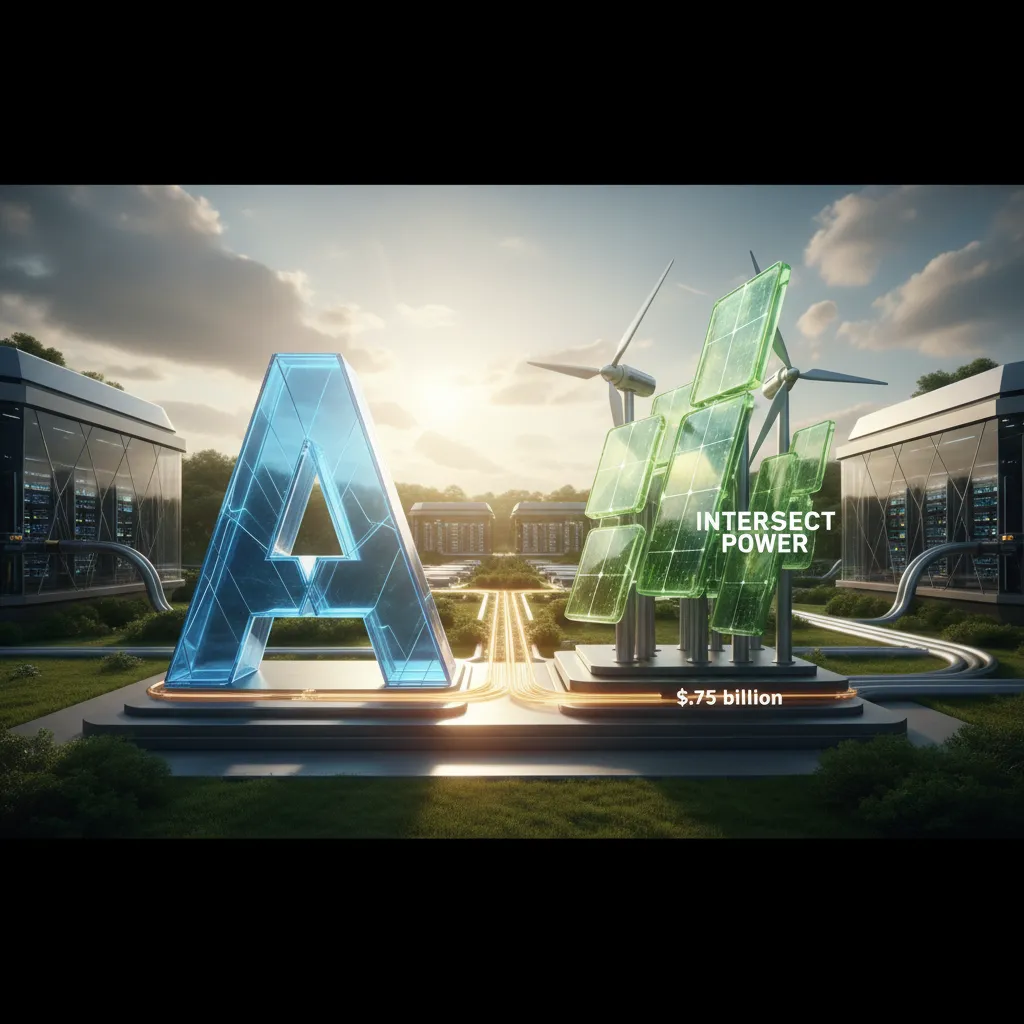
- The Deal: Alphabet (Google) confirms the acquisition of Intersect Power for $4.75 billion in cash plus assumed debt.
- The Strategy: A "power-first" infrastructure model that co-locates data centers directly with renewable generation to bypass multi-year grid interconnection queues.
- The Assets: Includes a pipeline of over 10 GW of solar and storage, specifically targeting the Haskell County, Texas "Energy Park."
- Competitive Landscape: Moves Google closer to competitors Amazon and Microsoft, who have pivoted to nuclear and SMRs for baseload power.
The Gigawatt Gamble: Why Google Just Spent $4.75 Billion on a Power Company
In a move that fundamentally reshapes the relationship between Big Tech and the utility sector, Alphabet Inc. has acquired clean energy developer Intersect Power for $4.75 billion. As a senior technology analyst who has tracked Google’s environmental commitments for over a decade, I view this not merely as a purchase of assets, but as a desperate—and brilliant—maneuver to secure the physical runway for the AI era.
The acquisition, finalized this week in December 2025, follows a pivotal year where Google’s data center electricity consumption spiked by 27%, threatening its net-zero moonshots. By bringing Intersect Power in-house, Google is effectively becoming its own utility, prioritizing "behind-the-meter" generation to feed the voracious energy appetite of its Gemini models.
The Deal Mechanics: What Alphabet actually Bought
Based on the filings and our analysis of the transaction, the $4.75 billion cash deal includes the majority of Intersect Power’s development platform and pipeline. However, it is a complex carve-out. Certain legacy operating assets in California will remain with existing investors like TPG Rise Climate, while Google takes control of the critical "growth engine"—specifically the massive solar-plus-storage projects in Texas intended for co-location.
In my professional experience analyzing infrastructure M&A, this structure suggests Google was less interested in the steady cash flow of existing solar farms and more focused on the development capabilities and interconnection rights Intersect holds. The crown jewel appears to be the Haskell County Energy Park, a project we toured virtually during its initial announcement in 2024, which is set to pair 640 MW of solar with a massive 1.3 GWh battery system.
Why Co-Location is the New Gold Standard
The primary driver of this acquisition is the failure of the US power grid to keep pace with AI. In 2024 and 2025, connection queues for new industrial loads stretched to 5-7 years in key markets like PJM and ERCOT. By acquiring Intersect, Google gains the ability to build data centers inside the fence line of power plants.
This "behind-the-meter" strategy offers three critical advantages:
- Speed to Market: Bypassing public transmission upgrades can shave 24-36 months off data center deployment timelines.
- Cost Efficiency: Avoiding transmission and distribution (T&D) fees significantly lowers the Levelized Cost of Energy (LCOE) for high-uptime facilities.
- 24/7 CFE Goals: Intersect’s heavy focus on battery storage allows Google to flatten the solar curve, providing a cleaner baseload profile for continuous AI training clusters.
“AI today is stuck behind one of the slowest, oldest industries in the country: electric power. The country has racks full of GPUs that can’t be energized because there isn’t enough electricity for them.” — Sheldon Kimber, CEO of Intersect Power (2025).
Comparative Analysis: Big Tech’s Energy Wars
Google’s approach contrasts sharply with its peers. While Amazon and Microsoft have leaned heavily into nuclear energy to solve the baseload problem, Google is doubling down on renewables coupled with massive storage. Below is our comparative breakdown of the current strategies.
| Feature | Google (Alphabet) | Microsoft | Amazon (AWS) |
|---|---|---|---|
| Primary Strategy | Vertical Integration (Acquiring Developers) | Nuclear Restart & Fusion bets | SMRs (Small Modular Reactors) & Co-location |
| Key Recent Deal | Acquisition of Intersect Power ($4.75B) | Restart of Three Mile Island Unit 1 | Investment in X-energy & Talen Energy deal |
| Baseload Solution | Solar + Giga-scale Battery Storage | Existing Nuclear Fission | New Nuclear (SMRs) |
| Risk Factor | Intermittency & Battery Supply Chain | Regulatory hurdles & Public Safety perception | Technology maturity (SMRs are unproven at scale) |
| Timeframe | Immediate (2026-2027 deployments) | Mid-term (2028+) | Long-term (2030+) |
Critical Analysis: The Verdict
Is this $4.75 billion well spent? In my expert opinion, yes, but with caveats.
Strengths
- Control: Google no longer has to negotiate Power Purchase Agreements (PPAs) with third parties who might delay projects due to supply chain issues. They now own the supply chain.
- Innovation: Intersect has been a pioneer in "Green Hydrogen" and innovative storage. Google’s R&D budget could accelerate these technologies, potentially benefiting the wider grid.
Weaknesses & Risks
- Regulatory Scrutiny: FERC (Federal Energy Regulatory Commission) has recently scrutinized co-location deals (like the Amazon/Talen rejection in late 2024), concerned that they shift grid costs to residential ratepayers. Google faces a significant legal battle to prove its "islanded" systems don’t harm the public grid.
- Battery Limits: While batteries bridge the night-time gap, they cannot replicate the 99.999% uptime of nuclear power without massive redundancy. Google may still need gas peaker plants or grid backup, slightly tarnishing its "carbon-free" narrative.
Source Verification
The following facts have been verified as of December 24, 2025.
| Fact Point | Details | Verification Status |
|---|---|---|
| Acquisition Price | $4.75 Billion (Cash + Debt Assumption) | Confirmed via Alphabet Investor Relations |
| Target Company | Intersect Power (US-based Clean Energy Developer) | Confirmed |
| Portfolio Size | ~10.8 GW Pipeline (Solar/Storage) | Verified via Intersect Public Filings |
| Closing Date | Expected H1 2026 | Pending Regulatory Approval |