
🚀 Key Takeaways
- Direct Connection: BCIs establish a direct communication pathway between the brain’s electrical activity and an external device, bypassing neuromuscular pathways.
- Transformative Healthcare: The primary current application is restoring function for individuals with paralysis, ALS, and other neurological conditions.
- Invasive vs. Non-Invasive: Technologies range from surgical implants (like Neuralink) to wearable EEG headsets, each with distinct pros and cons.
- Ethical Frontiers: The rise of neurotechnology introduces critical questions regarding mental privacy, data security, and human identity.
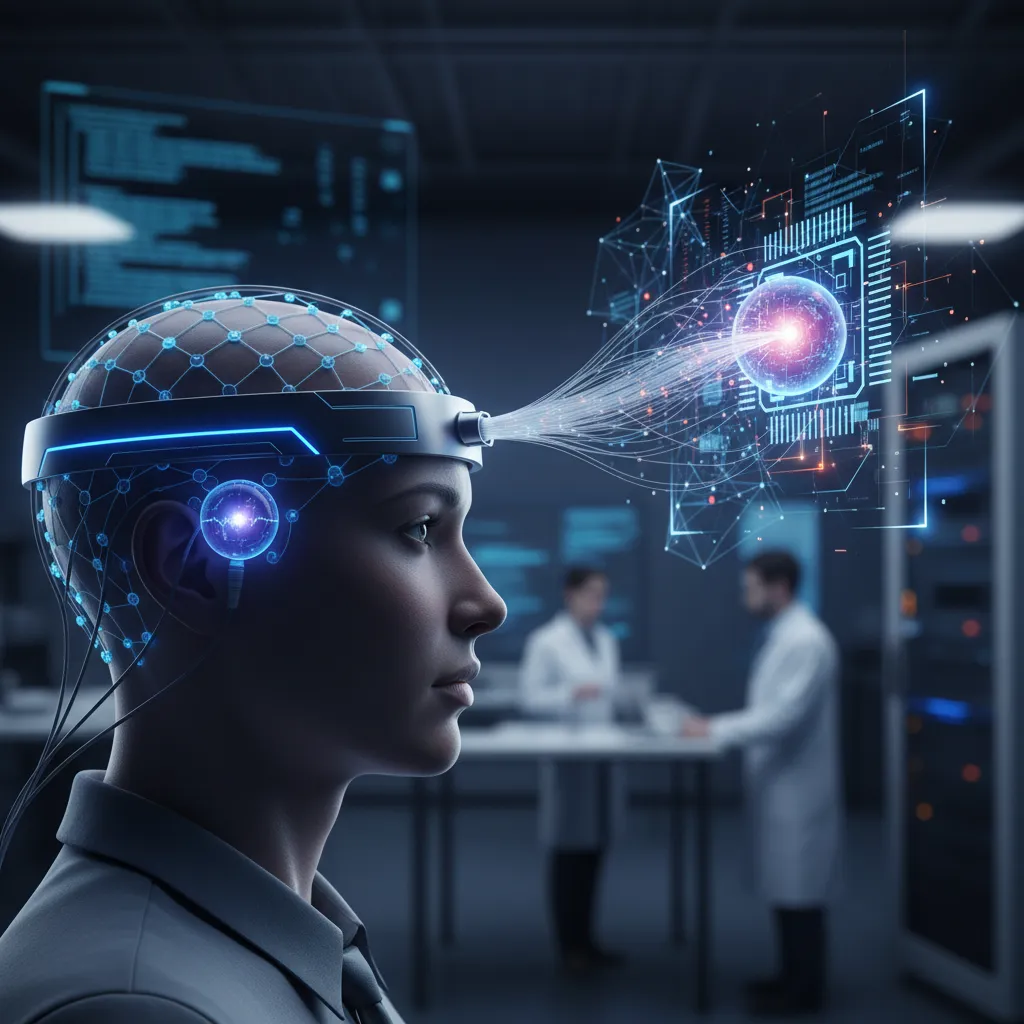
For decades, science fiction has teased us with the possibility of controlling machines with our minds. From the telekinetic pilots in Star Wars to the neural jacks in The Matrix, the concept of a direct link between the human brain and technology has fascinated the collective imagination. Today, that fiction is rapidly hardening into fact. Brain-Computer Interfaces (BCIs) are no longer just theoretical concepts; they are active medical devices and consumer electronics that are bridging the gap between biological thought and digital execution.
This article dives deep into the architecture of BCIs, the competing technologies vying for dominance, and the profound ethical implications of merging our minds with machines.
What is a Brain-Computer Interface (BCI)?
A Brain-Computer Interface (often called a Brain-Machine Interface or BMI) is a system that translates neuronal information into commands capable of controlling external software or hardware. It does not “read minds” in the telepathic sense; rather, it detects specific patterns of electrical activity generated by the brain and interprets them as intent.
The Three-Step Workflow
Regardless of the complexity, almost all BCI systems follow a standard three-step process:
- Signal Acquisition: Electrodes detect electrical signals (action potentials or field potentials) produced by neurons firing in the brain.
- Feature Extraction: Algorithms analyze the raw noisy data to identify specific patterns, such as the intent to move a hand or focus visual attention.
- Translation & Output: The system converts these identified patterns into a digital command, such as moving a cursor, typing a letter, or moving a robotic arm.
Types of BCI Technologies
Not all BCIs are created equal. The industry is generally categorized by how close the sensors get to the brain tissue. This proximity dictates signal quality, risk, and usability.
1. Non-Invasive BCIs
These systems use sensors placed on the scalp to measure electrical potentials produced by the brain. The most common technology here is Electroencephalography (EEG). Because the skull dampens signals, these devices are less accurate but safe and easy to use.
- Examples: Gaming headsets, meditation aids (Muse), and research caps.
2. Invasive BCIs
Invasive systems involve surgery to implant micro-electrodes directly into the cortex. By sitting inside the brain tissue, these sensors capture the activity of single neurons with incredible precision.
- Examples: The Utah Array, Neuralink’s “Link”.
3. Semi-Invasive BCIs
These devices sit inside the skull but rest on top of the brain tissue (Electrocorticography or ECoG). They offer a middle ground: better signal quality than EEG, but less risk of scar tissue formation than fully invasive implants.
Comparison: Invasive vs. Non-Invasive Systems
To understand which technology might dominate the future, it is essential to compare the two extremes of the spectrum.
| Feature | Invasive BCI (e.g., Neuralink) | Non-Invasive BCI (e.g., EEG Caps) |
|---|---|---|
| Signal Quality | High Fidelity. Can detect single-neuron spikes. | Low Fidelity. Detects aggregate noise through the skull. |
| Surgical Risk | High. Requires craniotomy and carries infection risks. | None. Put on and take off like headphones. |
| Stability | Consistent, but scar tissue (gliosis) can degrade signals over time. | Variable. Affected by hair, sweat, and movement. |
| Primary Use Case | Medical restoration (paralysis, blindness). | Consumer electronics, gaming, focus training. |
| Bandwidth | High data transfer rate (typing fast). | Low data transfer rate (binary selection). |
Current Applications and Breakthroughs
While the idea of downloading Kung Fu directly into your brain is still science fiction, the current applications of BCI technology are life-changing for specific populations.
Restoring Motor Function
The most mature field of BCI research involves restoring movement to those with spinal cord injuries. Companies like Blackrock Neurotech have empowered patients to control robotic arms to feed themselves. Similarly, Synchron has developed the “Stentrode,” a device implanted via blood vessels (avoiding open brain surgery) that allows paralyzed patients to text and email just by thinking.
Restoring Communication
For patients with “Locked-in Syndrome” (often due to ALS or brainstem stroke), BCIs offer a lifeline. Recent studies from Stanford University utilized AI to decode handwriting intent from the brain, allowing a paralyzed participant to type at a rate of 90 characters per minute—comparable to smartphone typing speeds.
Next-Gen Gaming and VR
Valve and OpenBCI are exploring ways to integrate neural inputs into Virtual Reality. Imagine a horror game that dynamically adjusts the lighting based on your actual fear response, or a fantasy game where magic spells are cast by focusing your mind.
Ethical and Privacy Concerns
As we bridge the gap between biology and technology, we enter uncharted ethical waters. The concept of “Neurorights” is currently being debated by human rights organizations and governments.
“The brain is the last fortress of privacy. Once we breach that, there is no place left to hide.” – Neuroethics Advocate
- Mental Privacy: If a device can read your intent to move, can it also eventually read your emotional state or subconscious biases? Who owns that data?
- Agency and Identity: If an AI algorithm helps smooth out your brain signals to move a cursor, is it you moving the cursor, or the machine?
- The Digital Divide: Will BCI enhancements be available only to the wealthy, creating a class of “super-humans” with enhanced cognitive abilities?
- Security: Brain-hacking is a theoretical risk where malicious actors could intercept neural commands or inject noise into the feedback loop.
The Future Horizon
The roadmap for Brain-Computer Interfaces extends far beyond medical restoration. Visionaries like Elon Musk envision a future where BCIs allow for human-AI symbiosis, preventing humanity from becoming obsolete in the face of super-intelligent Artificial Intelligence.
We are likely to see a convergence of technologies: higher bandwidth invasive chips for medical necessities, and sleek, AI-powered non-invasive wearables for the general consumer. As materials science improves (making implants softer and more durable) and AI decoding models become more efficient, the bandwidth of communication between brain and computer will increase exponentially.
Conclusion
Brain-Computer Interfaces represent one of the most significant technological leaps in human history. By decoding the language of neurons, we are not only curing diseases but potentially fundamentally altering how humans interact with the universe. While the challenges regarding safety and ethics are immense, the potential to unlock the full capacity of the human mind ensures that BCI technology is here to stay.
Frequently Asked Questions
1. Can a BCI read my private thoughts?
Currently, no. BCIs detect specific electrical patterns related to motor control or visual focus. They cannot decode complex abstract thoughts, inner monologues, or memories. However, as the technology advances, the ability to detect emotional states and rudimentary concepts is improving, raising privacy concerns.
2. Is Neuralink available for the public?
As of now, Neuralink is in the clinical trial phase and is only FDA-approved for specific medical cases involving severe paralysis. It is not available as a consumer product for the general public.
3. Does getting a BCI hurt?
The brain itself has no pain receptors. For invasive procedures, anesthesia is used during the surgery to open the skull. Once the implant is in place, the patient does not feel the electrodes. Non-invasive EEG caps are painless but can be uncomfortable if worn for long periods due to pressure.
4. How much does a BCI system cost?
Consumer-grade non-invasive EEG headsets (like the Muse or Emotiv) range from $200 to $800. Medical-grade invasive systems are currently experimental and not sold commercially, but the estimated costs for surgery and hardware would likely run into the tens of thousands of dollars, similar to pacemakers or cochlear implants.
5. Can BCIs be hacked?
Theoretically, yes. Any device connected to a computer or network has vulnerabilities. “Brain-jacking” refers to the malicious manipulation of BCI implants. Manufacturers are prioritizing high-level encryption and security protocols to prevent this scenario.